Try Santa AI


Listen to a real call
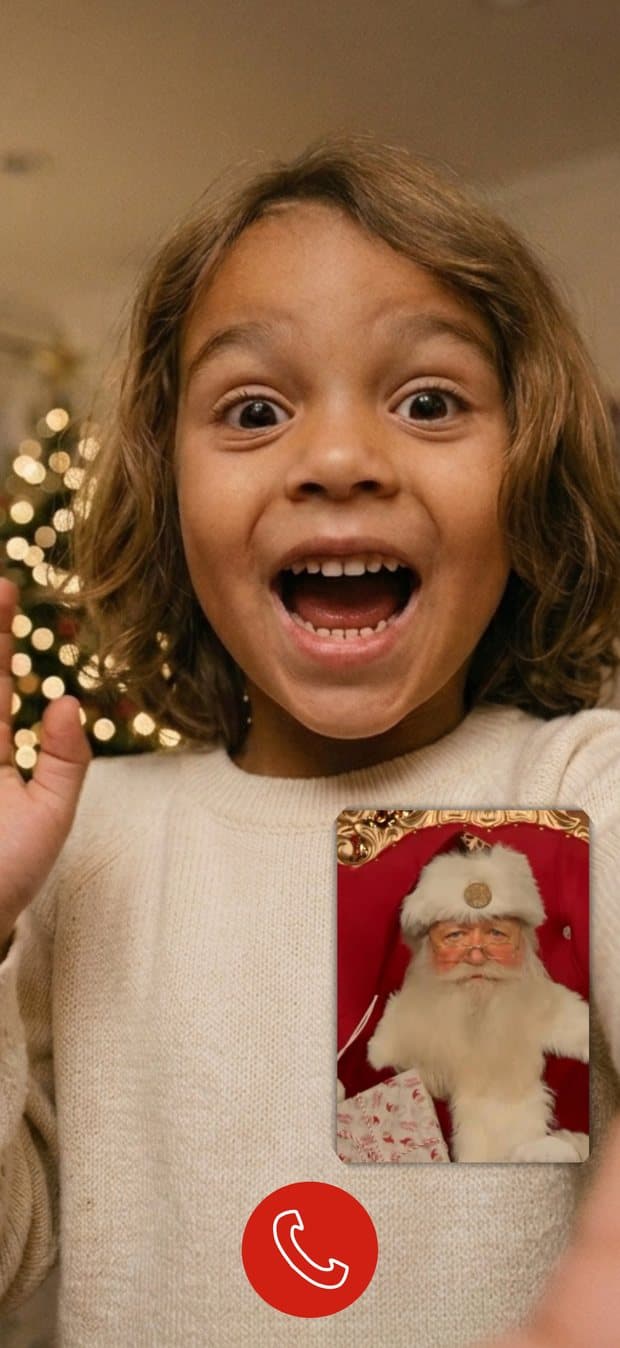
What your child hears
Santa:Hello, my dear Oscar. I saw that tall block tower you built with Rosie last week.
Child:How do you know about the tower?! Mum, he knows about the tower!
Santa:A little sister is a dear thing, Oscar. But I saw you shout at Rosie and grab toys from her hands. Being angry is allowed. Shouting is not. Tomorrow, use words and wait your turn. Will you promise me?
Child:Okay. I promise. I'll breathe first.
A naughty list call recorded for this demo: the parent asked Santa to talk about shouting at a little sister. The child is a voiced character; Santa's replies are live.
Does it actually help?
It can, for a simple reason: children often listen to a third party they admire more than to a parent they've heard a hundred times. What doesn't help is fear. A call that threatens "no presents" tends to produce a scared child for an evening and no change by the weekend. A call that says "I know you can be a great big sister — can you try being gentle with Rosie this week?" gives your child something concrete to aim for.
A few rules we built into our call, and that are worth keeping whatever you use:
- One behavior, not a list. "Grabbing toys from your sister" works. "Being good" doesn't.
- Something good first. Santa opens with a detail you gave him — a tower they built, a kind moment — before the hard part.
- No threats. Santa never mentions presents, coal or lists, never calls your child bad — he asks for a promise and says he'll remember it.
- Short. Two or three minutes. The point lands in the first minute.
How to set it up
- 1
Choose the behavior you want Santa to mention and phrase it the way your child would understand: "he shouts at his little sister Rosie and grabs her toys."
- 2
Add one good thing Santa can open with — a tower they built, a kind moment, a new skill.
- 3
Pick an audio or video call and the length. Most families choose 2–3 minutes for this.
- 4
Stay nearby. After the call, the most useful thing is a calm follow-up: "What did Santa ask you? Want to try it tomorrow?"
When not to do it
Skip it if your child is anxious by nature, going through a big change (a move, a new sibling, a loss), or if the behavior has a cause that needs a real conversation — sleep, school stress, something at home. Santa is a nudge, not a parenting strategy. And if your child is under three, they won't connect the call to their behavior; a cheerful greeting is better.
"Naughty list numbers" and prank apps
Searches for a naughty list phone number mostly turn up prank and fake-call apps: a recorded voice pretending to be Santa or an elf, with a fake caller screen. They can be fun, but they can't say your child's name or respond to what they say, and some are full of ads. If the goal is behavior, a call where Santa actually talks to your child about the specific thing works far better.
Questions parents ask
Will a naughty list call scare my child?
Ours is designed not to: Santa is warm, starts with something good, and never mentions presents, coal or lists. If your child is easily frightened, listen to the free demo on this page first.
Can Santa talk about more than one behavior?
We recommend one. Children remember one clear request; a list turns into a lecture.
Is there a free naughty list call?
Free options are pre-recorded prank-style calls that don't mention your child. Personalized calls, where Santa talks about your child's actual behavior, are paid.
What age is it for?
It works best from about 4 to 8 — old enough to connect Santa's words to their behavior, young enough to believe.